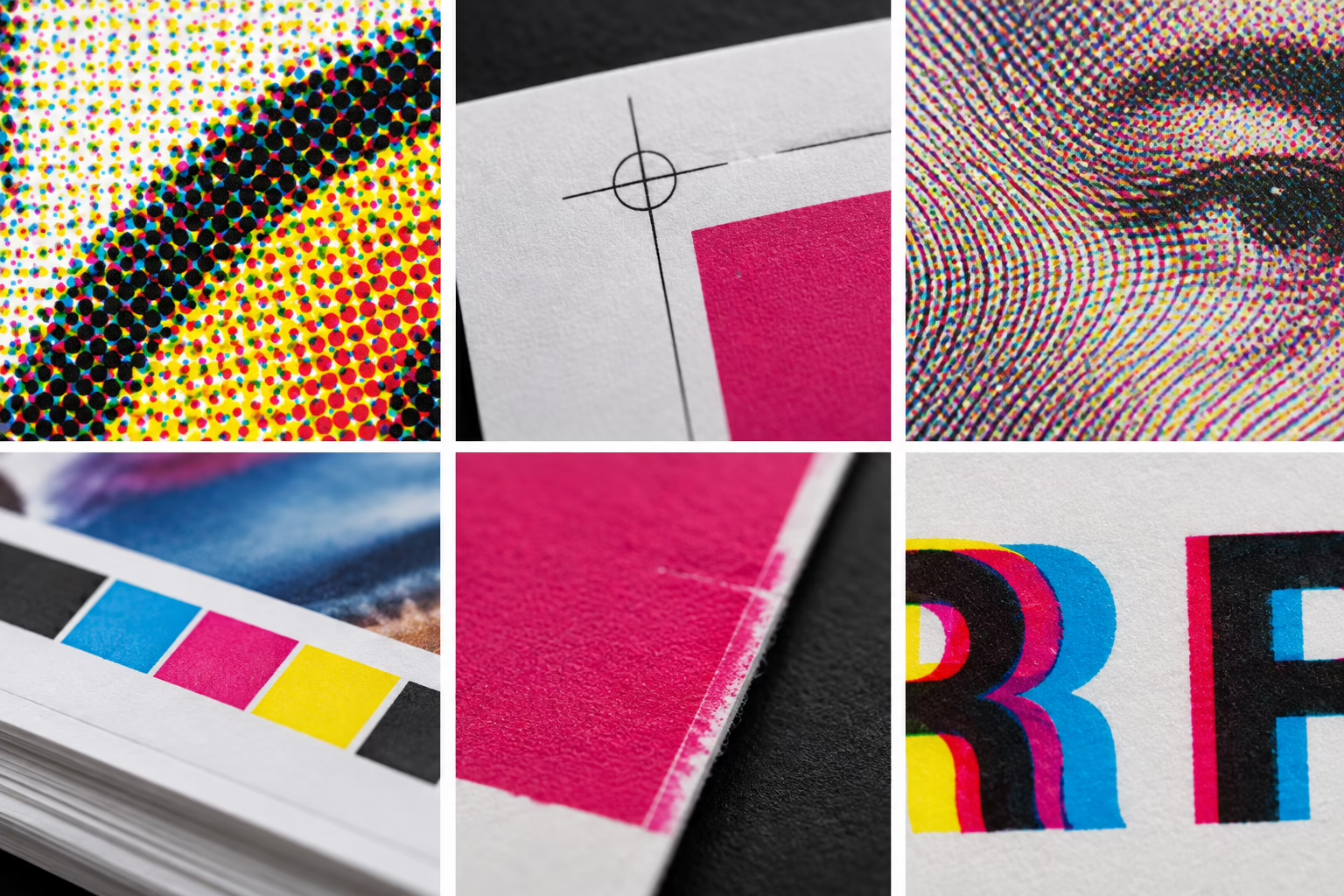

“Good enough” design is one of those phrases that sounds sensible until you start looking at what it might actually be costing a business. Being from Birmingham, I think I’m allowed one British Leyland reference here. That whole “it’ll do” culture can seem funny from a distance, but in business it can quietly become the standard before anyone realises.
I understand why it happens. Everyone is busy, budgets are under pressure, the team needs something out of the door, and nobody wants to turn every brochure, sales presentation, web page or campaign into a grand creative exercise. The website isn’t terrible. The proposal does the job. The social graphics are fine. Nothing is obviously broken, so it stays as it is.
The problem is that “good enough” rarely stays as one isolated decision.
Over the years, I’ve seen how small compromises can gradually shape the way a business is perceived. A slightly tired presentation here, inconsistent visuals there, a proposal that doesn’t quite reflect the quality of the business, or a website that feels a step behind where the company actually is today.
None of these things necessarily feel disastrous on their own. Together, however, they start to tell a story.
That is the part many businesses miss. Buyers do not always separate the quality of your creative from the quality of your business as neatly as we might like. If a presentation feels average, some of that feeling can transfer to the offer, the team and the service behind it. It may not be a conscious decision, but people make these associations all the time.
Of course, not everything needs to be award-winning. Most businesses don’t need design that wins applause from other designers. They need creative that reflects the quality of what they do, supports their sales conversations and presents them as the serious business they actually are.
After 35 years, I’d say the real problem with “good enough” is that it can keep a better business looking more ordinary than it deserves. Once ordinary becomes acceptable, it can be surprisingly difficult to shift.
The question is not whether every piece of creative needs to be perfect. It is whether the way your business presents itself is keeping pace with the quality of the business itself.
If you’re interested in finding out, we’ve built a free Design & Creative Diagnosis tool to give you an honest view of where your brand stands. No pitch, just useful insight.