
There is no single vision of the future.
For every world filled with sleek glass interfaces and floating holograms, there is another built from worn metal, physical switches, faded plastics, and glowing CRT monitors. Some of the most memorable science fiction doesn’t try to predict tomorrow accurately. Instead, it imagines tomorrow using the design language of the era in which it was created.
That is why “retro futurism” continues to resonate. It reminds us that design is never just about technology. It is about culture, optimism, and the way people imagine what comes next.
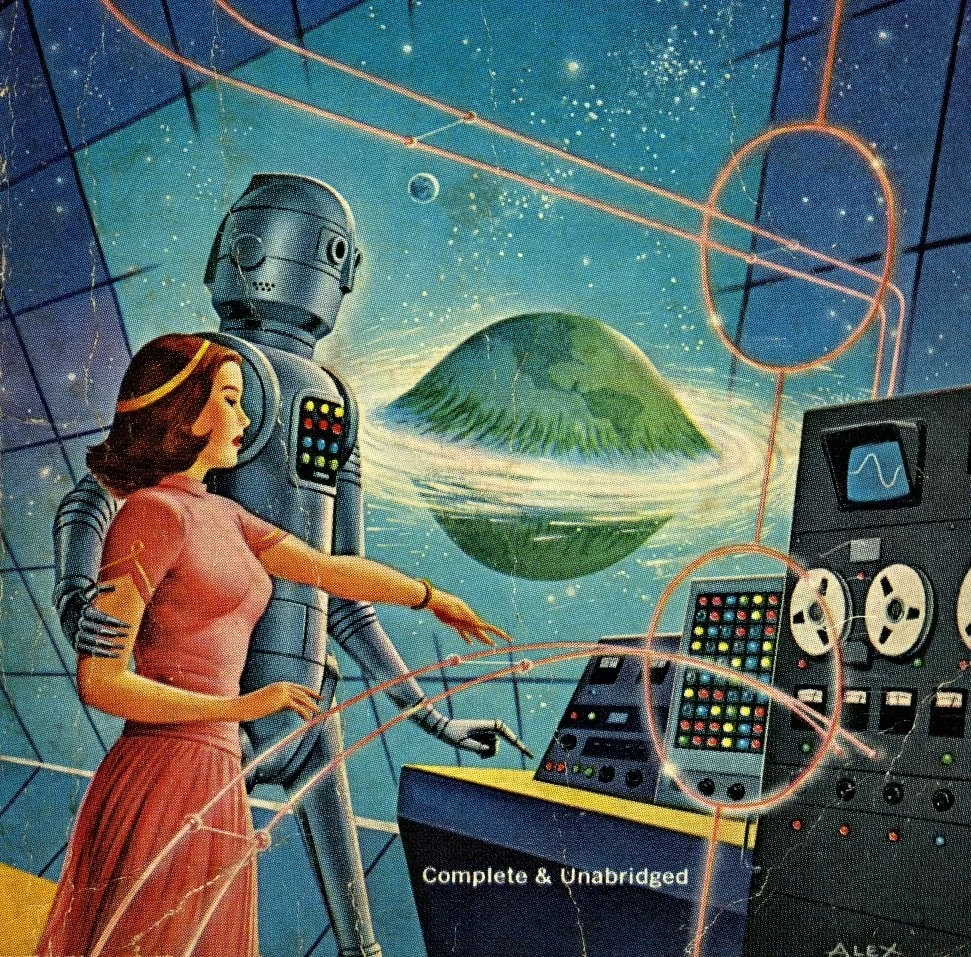
Take Alien. Released in 1979, its vision of the future feels industrial rather than futuristic. The Nostromo is filled with chunky keyboards, analogue switches, monochrome displays, and exposed machinery. Nothing is hidden behind polished glass panels. Everything feels built to be repaired. Forty years later, the technology is outdated, but the design still feels believable because every detail supports the same visual language. This is not a luxury spacecraft. It is a working vehicle, and its design reflects that.
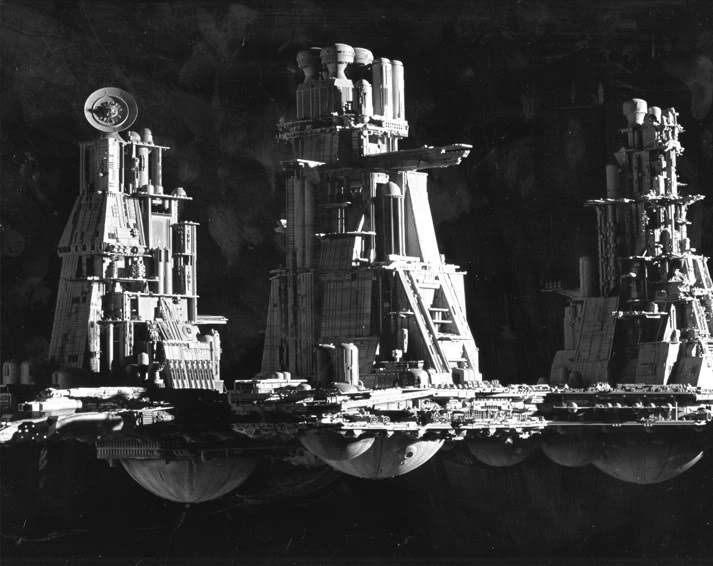
A completely different approach appears in Fallout. Rather than imagining a future beyond today’s technology, Fallout imagines what would have happened if 1950s America had never changed direction. Cars still have sweeping chrome fins. Posters are filled with smiling atomic families. Rounded typography, mint greens, cream plastics, and cheerful mascots remain despite the collapse of civilisation. The result is a world built on optimism that now feels hauntingly ironic. The retro styling tells a story long before the player learns what happened.

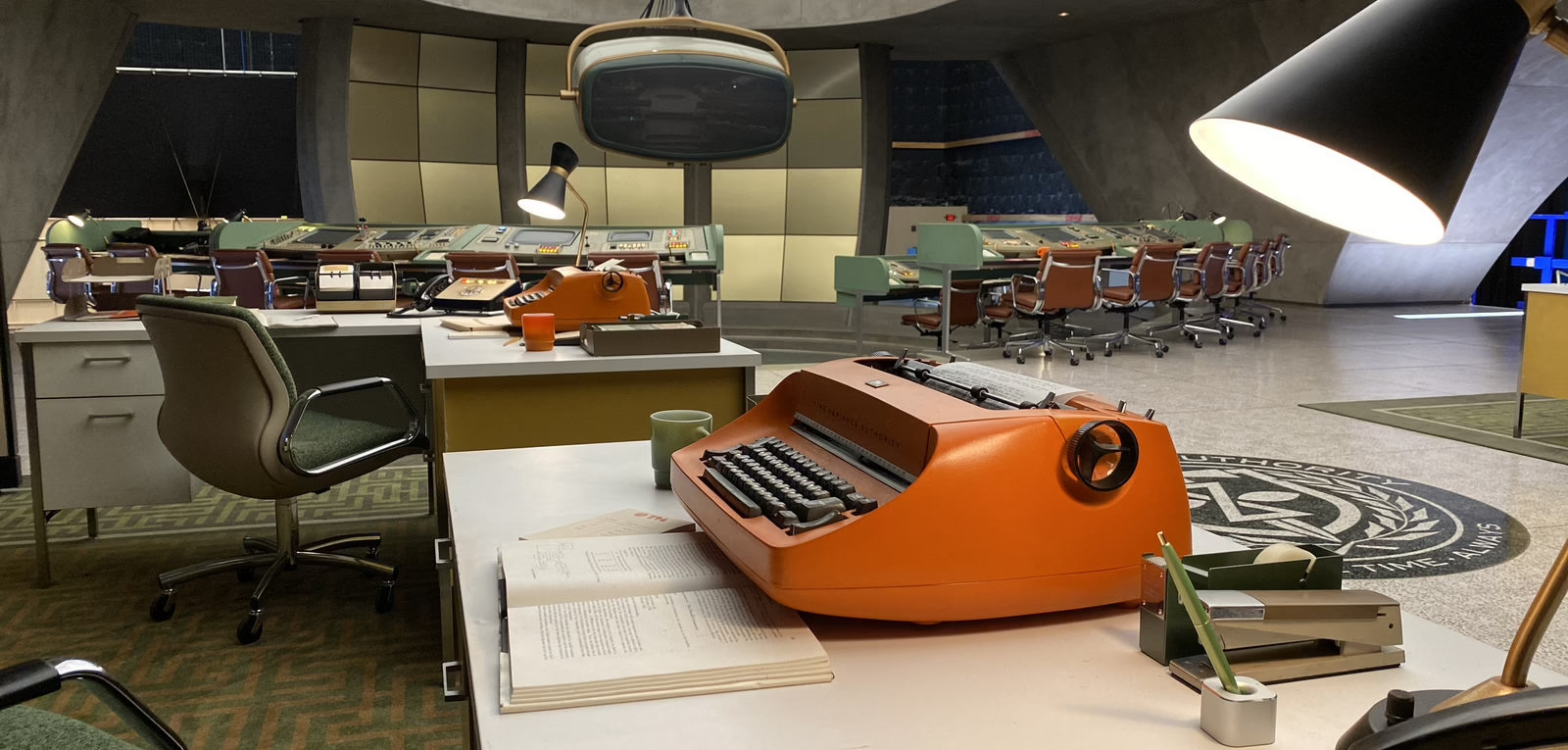
The Loki TVA takes another route entirely. Instead of futuristic minimalism, it resembles a government office frozen somewhere between the 1960s and 1980s. Beige filing cabinets stretch endlessly into the distance. CRT monitors sit beside analogue clocks and paper documents. Even the typography and signage feel borrowed from old public buildings. The bureaucracy becomes part of the aesthetic, making time itself feel organised by outdated office equipment. It is instantly recognisable because it feels strangely familiar.
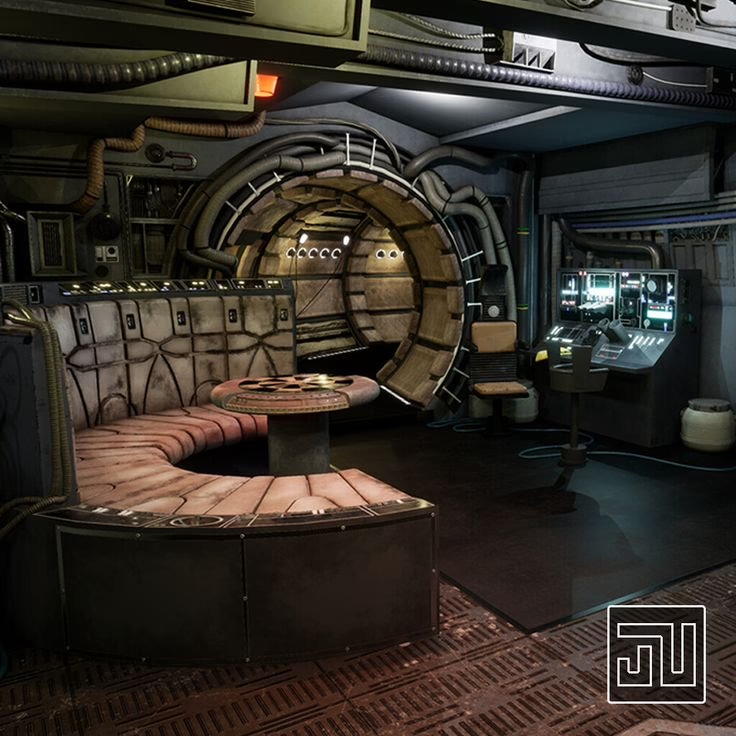
Even worlds that appear more technologically advanced often embrace retro influences. The ships in Star Wars are covered in scratches, exposed wiring, physical buttons, and worn control panels. The Millennium Falcon looks less like an experimental spacecraft and more like an old work van that has been patched together over decades. Those imperfections make the galaxy feel lived in. Instead of a pristine future, Star Wars gives us one with history.
The same philosophy appears in Guardians of the Galaxy, although with a much brighter personality. Cassette tapes, colourful displays, retro typography, and analogue technology sit comfortably alongside spaceships and advanced alien worlds. The films deliberately blend decades of visual influence, creating a universe that feels playful and nostalgic without ever seeming old-fashioned. Music, colour, and graphic design become just as important to the identity of the films as the characters themselves.
What unites all of these worlds is consistency. None of them are trying to predict the future correctly. They are building believable futures by committing fully to a single design philosophy. Colour palettes, typography, materials, lighting, interfaces, and architecture all support the same idea.
That is perhaps the biggest lesson retro futurism offers designers;
Good design does not need to be realistic. It needs to be coherent.
Whether designing a fictional universe, a brand identity, or a digital product, every visual decision contributes to the story being told. When typography, colour, texture, and layout all speak the same language, audiences stop questioning the design and start believing in the world it creates.
Perhaps that is why retro futures never go out of style. They are not predictions of tomorrow. They are snapshots of yesterday’s imagination, preserved through design, and they continue to inspire because they remind us that the future has always been a creative exercise.