
Designing for events is never just about making something look good. It is about understanding the environment, the audience, and the message, then building a visual system that can cut through in seconds.
Our work with AbsoluteLabs brought that challenge into focus across two very different events, MuleSoft Connect:AI and the Retail Technology Show. While both sat within the same brand, the creative direction for each needed to respond to entirely different contexts.
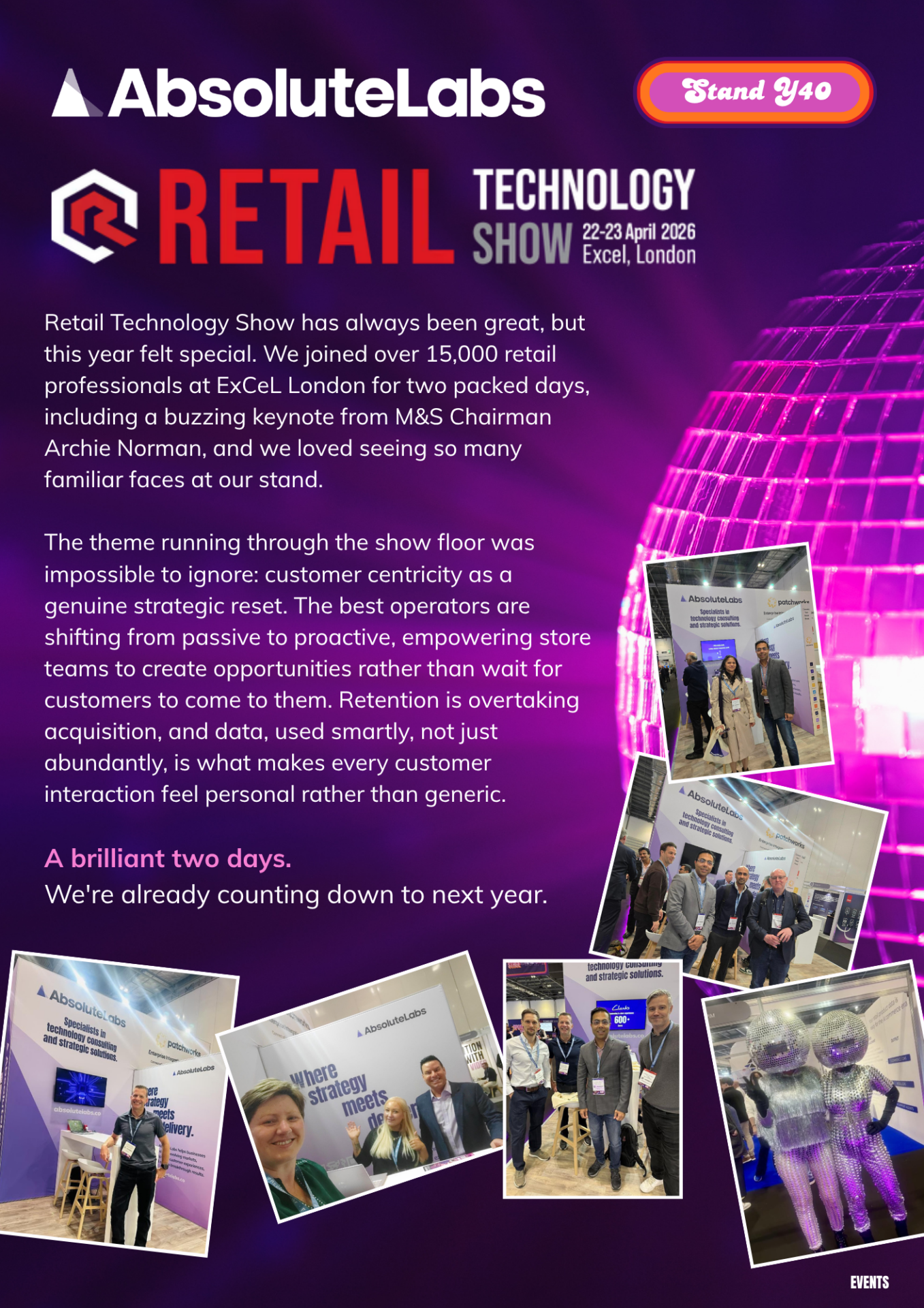
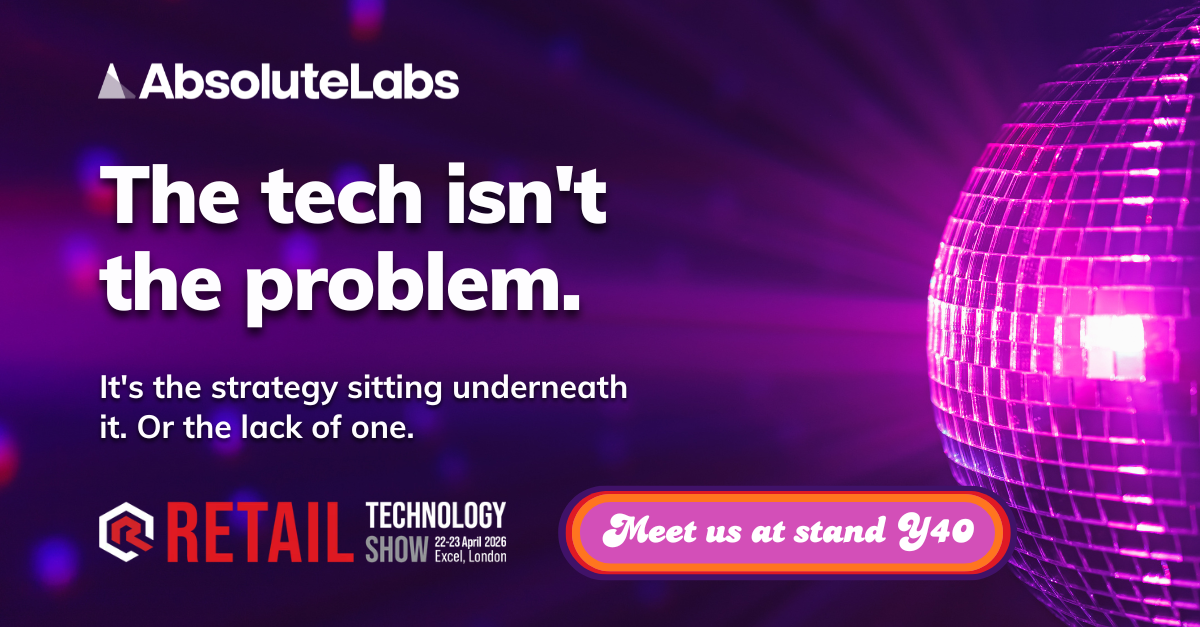
For the Retail Technology Show, the design needed to perform at scale. This was a busy, high-footfall environment where visibility mattered just as much as clarity. Rather than forcing a separate identity, the approach was to align closely with the event’s own visual language.
By working with the established look and feel of the show, the stand graphics, leaflets, and supporting assets felt naturally embedded within the space while still clearly representing AbsoluteLabs. Bold colour, strong contrast, and confident typography ensured the brand stood out, but in a way that felt relevant to its surroundings rather than disconnected from them.
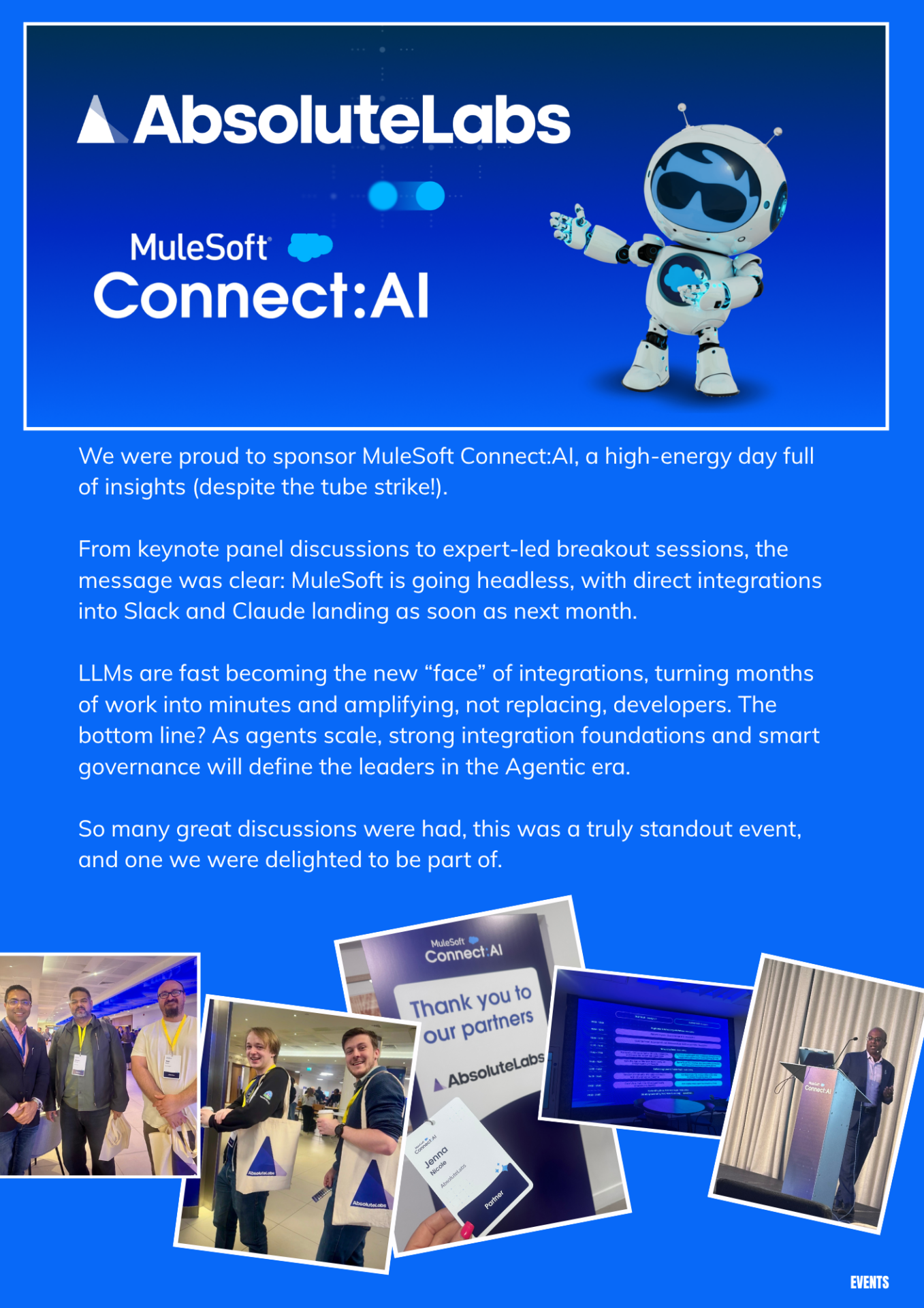
MuleSoft Connect:AI required a different approach. Here, the visual direction was built around MuleSoft’s own established branding. Instead of reinventing the look, the focus was on integrating AbsoluteLabs seamlessly into that ecosystem.
Using MuleSoft’s colours, imagery, and visual cues, the assets were designed to feel immediately familiar to the audience, while clearly communicating AbsoluteLabs’ presence and role within that space. Alongside printed leaflets, we also developed a promotional video tailored to the event, allowing the brand to communicate dynamically and fit naturally within a more digitally driven environment.

What makes this kind of work interesting is the balance between consistency and flexibility. AbsoluteLabs needed to feel like the same brand across both events, but not at the expense of relevance. One approach leaned into the identity of the event itself, while the other worked within the framework of an existing brand system.
The result is two distinct visual expressions built from the same foundation. Each one designed to fit its environment, speak to its audience, and perform in context.
Projects like this highlight an important truth about design. Context shapes everything. The same brand can, and should, adapt depending on where it lives and how it needs to communicate. When that balance is right, design does more than represent a brand. It helps it belong.